DHA DataFlow: The Complete Guide to Primary Source Verification for Dubai Licensing
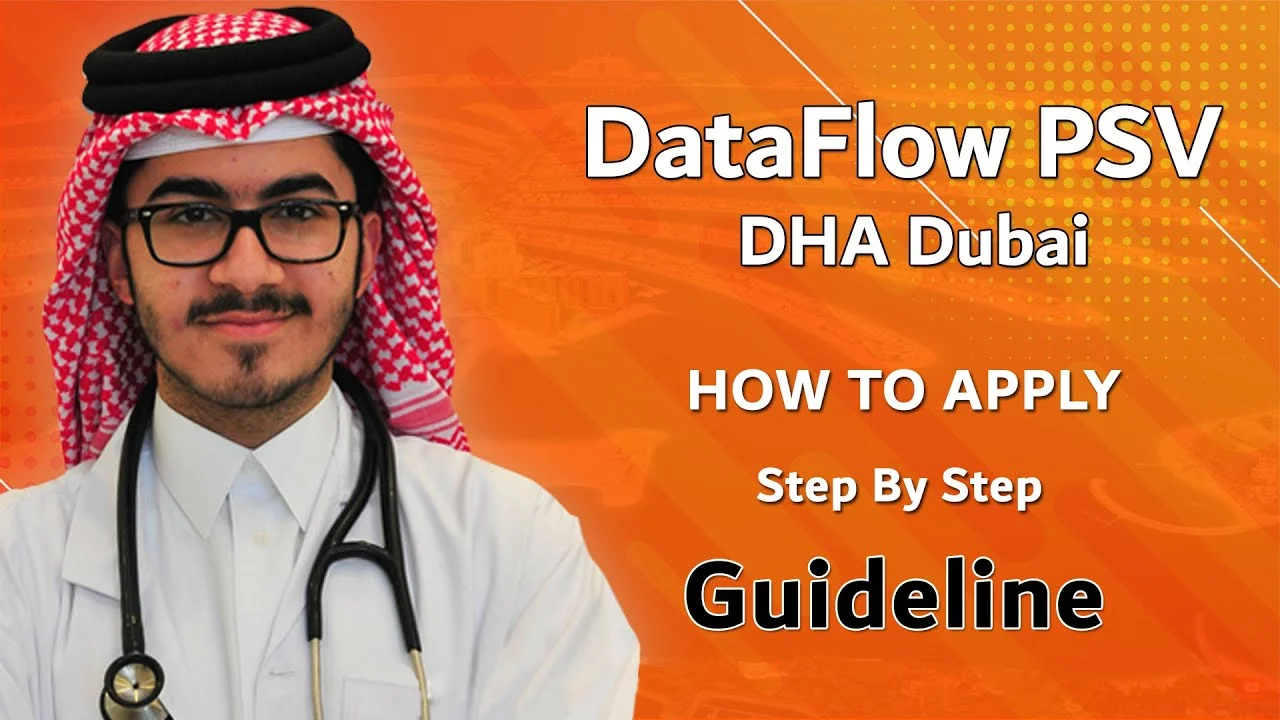
If you’re applying for a DHA license, DataFlow is the step that decides whether the rest of your application even moves forward. It’s the Primary Source Verification process the Dubai Health Authority uses to confirm that your degree, your professional license, and your work experience are real, checked directly with the institutions that issued them in the first place. No DataFlow report, no DHA exam booking, no license. This guide walks through exactly what DHA expects, which documents you’ll need, how long it realistically takes, and what to do if things don’t go smoothly.
What Is DHA DataFlow?
DHA DataFlow is the specific version of Primary Source Verification (PSV) required by the Dubai Health Authority before a healthcare professional can book their licensing exam or move forward with credentialing. It’s run through the DataFlow Group, an independent verification agency founded in 2006 and headquartered in Dubai, which contacts your university, your licensing body, and your former employers directly to confirm your documents are genuine.
The DHA doesn’t verify your credentials itself. It relies entirely on DataFlow’s findings. A positive report clears the way for exam scheduling. A negative report puts your application on hold until the specific issue is resolved.
Why DHA Requires DataFlow
The reasoning is straightforward. Dubai’s healthcare system depends heavily on internationally trained professionals, and there’s no efficient way for the DHA to personally check a medical degree issued by a university on the other side of the world. DataFlow exists to close that gap, catching forged certificates, inflated experience letters, or expired licenses before an unqualified applicant ever reaches a patient. It also allows the DHA to flag a fraudulent applicant to other regional authorities, so a rejected case in Dubai doesn’t quietly resurface somewhere else in the Gulf.
Who Needs DHA DataFlow?
Anyone applying for a new DHA professional license needs a completed DataFlow report, regardless of category. That includes doctors, dentists, nurses, pharmacists, radiographers, lab technicians, physiotherapists, and other allied health professionals. The requirement applies whether you’re applying from abroad or already living in the UAE on a different visa category.
Documents Required for DHA DataFlow
The DHA’s document list is more detailed than most other Gulf authorities, largely because it covers a five year experience window rather than the shorter windows used elsewhere.
| Document | Notes |
|---|---|
| Passport size photo | White background |
| Passport copy | Front and back page |
| Secondary school certificate | |
| Higher secondary certificate | |
| Degree or diploma certificate | |
| Registration certificate (license) | From your home country or last country of practice |
| Mark lists for all years | |
| Academic transcript | |
| Experience certificate | Covering the last 5 years, from HR departments confirming job title and dates |
| Basic Life Support (BLS) certificate | |
| Good Standing Certificate | Issued within the last 6 months, from your regulatory body or state nursing council |
| Documents for abroad experience, if applicable | A license and Good Standing Certificate from the relevant foreign regulatory body is mandatory if you’ve worked outside your home country |
Any document not already in English or Arabic needs official translation before submission. Scan clearly, and make sure the full border of each document is visible. A cropped or blurry scan is one of the more common, entirely preventable reasons DataFlow requests a resubmission.
Step by Step: How the DHA DataFlow Process Works
Step 1: Complete the Sheryan self assessment. Before DataFlow even enters the picture, DHA requires you to register on the Sheryan portal and run its Self Assessment Tool to confirm you meet the eligibility bar for your specific category. This step exists precisely so applicants don’t spend money on DataFlow before knowing whether they’re even eligible.
Step 2: Start your DataFlow case through the DataFlow Group’s platform. Once your Sheryan eligibility is confirmed, you begin the actual PSV application, selecting DHA as your target regulatory authority.
Step 3: Register and activate your account. Use the same personal details and ID number that match your Sheryan profile, since a mismatch here can cause delays further down the line.
Step 4: Complete your ID verification. Upload a scanned passport copy or enter your passport details manually.
Step 5: Choose your service level and package. You’ll select regular or premium service, and confirm which documents need verification based on your professional category. Sign and upload the Letter of Authorisation, which legally permits DataFlow to contact your university, licensing body, and past employers on your behalf.
Step 6: Upload your documents. Follow the checklist above closely, since a single missing or unclear document can pause the entire case.
Step 7: Review, pay, and submit. Once every section is complete, review your application carefully before payment, since amendments after submission can extend your timeline.
Step 8: Wait for verification and respond quickly to any requests. DataFlow will contact you by email if a document couldn’t be verified or if something needs clarification. Responding within a day or two, rather than a week, is one of the simplest ways to avoid unnecessary delay.
Step 9: Receive your DataFlow report. A positive result gets forwarded to your DHA Sheryan profile automatically, clearing you to move toward exam scheduling. You’ll also receive email and text notification once it’s ready.
DHA DataFlow Fees
Expect to pay somewhere in the range of USD 160 to 210 for standard DataFlow verification, though the exact figure depends on how many documents need checking and whether you choose the premium assisted service. Confirm the current fee directly on the DataFlow portal before paying, since these figures do get revised periodically.
How Long Does DHA DataFlow Take?
Most DHA DataFlow cases are completed within 30 to 45 business days from submission. Initial acknowledgment of your case typically arrives within 48 hours, but the bulk of that timeline goes toward actually contacting and waiting on responses from your university, your licensing body, and your previous employers. If any of these institutions is slow to respond, your case can stretch beyond that window through no fault of your own.
Choosing the premium service tends to shorten the practical waiting experience, not because the verification itself moves faster, but because you get a dedicated contact who follows up proactively and flags problems as they appear, rather than leaving you checking a static status screen for weeks.
How to Check Your DHA DataFlow Status
Log into your account on the DataFlow portal and check your case using your DataFlow reference number. Some status checks also ask for your passport number as a secondary identifier. If your university or previous employer hasn’t responded yet, your status may sit unchanged for a while. That’s normal, not necessarily a red flag.
What Happens If Your DHA DataFlow Report Comes Back Negative?
A negative result is frustrating, but it’s rarely final. It usually points to something specific: a name spelling mismatch between your passport and your degree certificate, an unresponsive issuing institution, or a document submitted in the wrong format. From there, you generally have two paths. You can request re verification once the specific issue is corrected, or, in more serious cases, end that case and start a fresh application.
The mistake to avoid is resubmitting everything from scratch without first identifying exactly which document or detail triggered the negative result. That approach wastes both time and money.
Can You Transfer a DataFlow Report to or from DHA?
Often, yes. A DataFlow report completed for another Gulf authority, such as HAAD, MOH, or OMSB, can frequently be reciprocated for DHA rather than requiring an entirely new application, and the reverse applies as well. If you already hold a completed report elsewhere, mention this when starting your DHA case, since it can save significant time and cost.
What Comes After a Positive DHA DataFlow Report?
Once your report is positive, you move on to booking your DHA exam through Prometric. After passing, you’ll receive an eligibility letter through Sheryan, which is what you use to apply for jobs at DHA licensed facilities. Your actual license only activates once an employer submits your job offer and required documentation, so a positive DataFlow report and a passed exam are two milestones on the way to a license, not the finish line itself.
Common Mistakes That Delay DHA DataFlow Applications
Mismatched names across documents. Even a minor spelling difference between your passport and your degree certificate can trigger a delay or a negative result. Correcting this after submission usually means requesting an updated document from the original institution, which adds weeks to your timeline.
An expired Good Standing Certificate. These are only valid for six months. Applicants who request theirs too early often find it’s expired by the time the rest of their application is ready to submit.
Slow responses from your own institutions. DataFlow needs to hear back from your university and past employers directly. Giving these institutions advance notice that a verification request is coming can prevent it from sitting ignored in an inbox for weeks.
Low quality scans. A document scan that cuts off the border or is too blurry to read clearly is one of the simplest, most avoidable reasons for a resubmission request.
Starting DataFlow before confirming Sheryan eligibility. Paying for verification before you know you’re actually eligible for your target category is a costly mistake that the Self Assessment Tool exists specifically to prevent.
DHA DataFlow Compared to Other Gulf Authorities
It helps to understand where DHA sits relative to its neighbors, since a lot of applicants end up applying to more than one Gulf authority over the course of their career. DHA’s experience certificate requirement covers 5 years, which is longer than DOH Abu Dhabi’s 2 year requirement and considerably longer than Saudi Arabia’s SCFHS, which asks for just 1 year. Qatar and Oman generally fall in between, asking for 3 to 5 years depending on the specific case.
This difference matters practically. If you’re preparing documents for DHA first and might apply to DOH or SCFHS later, gather your full 5 year experience history from the start. It’s much easier to have more documentation than you need for a shorter authority than to go back and request additional certificates from employers years after you’ve left a role.
DHA and HAAD (now DOH) also share a close relationship when it comes to report reciprocity. Because both fall under the UAE’s broader healthcare framework, applicants moving between Dubai and Abu Dhabi often find their existing DataFlow verification transfers with fewer complications than moving to an authority outside the UAE entirely.
Tips to Speed Up Your DHA DataFlow Application
Request your Good Standing Certificate last, not first. Since it expires after 6 months, timing it to arrive just before you’re ready to submit the rest of your application avoids the frustrating situation of restarting this one document while everything else sits ready.
Notify your university and past employers in advance. A short email letting them know a verification request from DataFlow is coming, and asking who on their end typically handles these, can shave real time off your case. Many delays happen simply because the request lands with someone who doesn’t recognize what DataFlow is.
Keep digital copies of everything, not just the originals. If DataFlow requests a resubmission or a clearer scan, having a properly organized digital folder means you can respond within hours instead of days spent hunting for a document.
Choose premium service if your timeline has a hard deadline. If you already have a job offer with a start date attached, or a visa timeline that’s ticking, the visibility the premium service provides is often worth more than the extra fee itself.
Don’t wait until DataFlow verification is complete to start studying for your exam. These two processes can run in parallel. Many candidates lose weeks by treating DataFlow and exam preparation as sequential steps when they don’t have to be.
Why Working With a Consultant Can Help
DHA DataFlow isn’t conceptually difficult, but it’s unforgiving of small mistakes. A single mismatched name, an expired certificate, or a document submitted in the wrong format can add weeks to a process that would otherwise move smoothly. Working with a consultancy that reviews your documents before submission, and that has a direct line of communication if something stalls, often prevents these issues rather than fixing them after the fact.
This is particularly true for applicants managing DataFlow from outside the UAE, where time zone differences and unfamiliarity with the Sheryan and DataFlow portals can turn a routine document request into a multi week back and forth.
Frequently Asked Questions
Is DHA DataFlow the same as Primary Source Verification? Yes. DataFlow is the company that performs Primary Source Verification specifically for DHA and other Gulf regulators, so the two terms describe the same process.
How much does DHA DataFlow cost? Typically between USD 160 and 210, depending on how many documents require verification and whether you choose the standard or premium service. Confirm the current fee on the DataFlow portal, since it can change.
How long does DHA DataFlow take? Most cases take 30 to 45 business days, though this depends heavily on how quickly your university, licensing body, and previous employers respond to verification requests.
What documents do I need for DHA DataFlow? Your degree certificate, mark lists and transcript, professional license, an experience certificate covering the last 5 years, a BLS certificate, and a Good Standing Certificate issued within the last 6 months, among other supporting documents.
Can I use my DataFlow report from another Gulf country for DHA? Often yes. A completed report from another authority such as HAAD, MOH, or OMSB can frequently be reciprocated for DHA, saving you time and cost compared to starting fresh.
What should I do if my DHA DataFlow report is negative? Identify the specific issue that caused the negative result, whether it’s a document mismatch or an unresponsive institution, then request re verification once it’s resolved rather than resubmitting the entire application from scratch.
Do I need to complete the Sheryan self assessment before starting DataFlow? Yes. Confirming your eligibility through Sheryan first prevents you from paying for DataFlow verification before knowing whether you actually qualify for your target category.
Should I start DataFlow before or after finding a job in Dubai? You can and generally should start before securing a job offer. Employers in Dubai tend to favor candidates who already have a completed DataFlow report, since it shortens the hiring process on their end and signals that your credentials are already verified.
Last updated: July 2026